
So here's a fun fact that researchers apparently just figured out: methamphetamine, one of the most devastatingly addictive substances on the planet, has been moonlighting at a second receptor this whole time. Scientists have been so focused on one molecular target that they missed the other one hiding in plain sight. It's like spending years studying a bank robber's getaway car only to discover they had a motorcycle parked around the corner the whole time.
A new study in Cell Reports identifies this second receptor target for meth, called the beta-2 adrenergic receptor (or beta2AR if you want to sound like you belong in a lab). This receptor works through completely different mechanisms than the one we already knew about, and it might explain why current treatment approaches haven't been as effective as we'd hoped.
The Receptor We Already Knew About (And Thought Was the Whole Story)
For years, the star of the meth pharmacology show has been TAAR1, which stands for trace amine-associated receptor 1. That's a mouthful, so let's just call it the receptor that meth was supposed to be obsessed with.
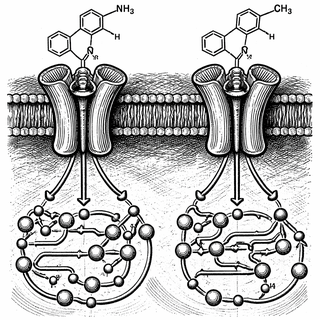
Here's the thing: TAAR1-based treatments for meth addiction are currently in development. Pharmaceutical companies have been pouring money into this target because, well, it seemed like the obvious play. Meth activates TAAR1, TAAR1 does stuff to brain signaling, addiction happens. Target TAAR1, fix addiction. Simple, right?
Except it hasn't been that simple. The treatments haven't worked as well as predicted, and meth's addictive effects couldn't be fully explained by TAAR1 alone. Something was missing from the picture. It was like trying to explain a complicated heist when you only knew about half the crew.
Enter the Surprise Guest: Beta-2 Adrenergic Receptor
The researchers behind this study decided to look beyond TAAR1 and ask a simple question: is meth doing something else we haven't noticed? They focused on the beta-2 adrenergic receptor, which is part of the same family of receptors that respond to adrenaline and noradrenaline. You know, the fight-or-flight stuff.
Using a battery of cellular and molecular techniques, they demonstrated that meth directly activates beta2AR. Not through some roundabout mechanism, not as a side effect, but as a direct target. Meth binds to it and turns it on, triggering a cascade of G protein signaling that's distinct from what happens when TAAR1 gets activated.
And here's why that matters: beta2AR is expressed all over the place, including in the brain's reward circuits. These are the neural pathways that make you feel good when you eat a cheeseburger, fall in love, or unfortunately, take drugs. If meth is directly activating receptors in these circuits through a pathway we weren't even tracking, that's kind of a big deal.
Two Receptors, Two Different Stories
What makes this really interesting is that TAAR1 and beta2AR don't just represent two targets. They represent two different, potentially opposing, roles in what meth does to the brain.
TAAR1 activation, ironically, can actually reduce dopamine signaling. It's almost like a brake pedal in some contexts. Some researchers have even suggested that TAAR1 might be somewhat protective against addiction, not contributing to it. That's a weird twist when you're trying to develop anti-addiction drugs.
Beta2AR, on the other hand, might be more directly involved in the rewarding and addictive properties of meth. Its effects on reward circuits could be what's driving people to keep using despite the obvious consequences. It's the gas pedal that TAAR1 might have been trying to counteract.
So we've been developing drugs that target the brake pedal while ignoring the gas pedal. You can see why that might lead to suboptimal results.
Why This Changes the Treatment Game
Here's where the rubber meets the road for people actually trying to help meth users. If you've been developing treatments that only target TAAR1, and beta2AR is doing half the work of making meth addictive, your treatment is basically fighting with one hand tied behind its back.
The implications are pretty clear. Future treatment strategies might need to be combination approaches that target both receptors. You can't just hit one and expect the other to behave itself. It's like trying to control a two-headed dragon by only putting a leash on one neck.
This also opens up entirely new avenues for drug development. Beta-blockers, which target beta-adrenergic receptors, already exist and are used for various conditions. Could existing medications be repurposed or modified to help with meth addiction? It's an open question now, but at least it's a question we know to ask.
The Bigger Picture
This discovery is a reminder that pharmacology is rarely as simple as we'd like it to be. Drugs don't just hit one target and call it a day. They're promiscuous molecules that interact with multiple receptors, pathways, and systems. Understanding addiction means understanding all of these interactions, not just the most obvious one.
The molecular landscape of methamphetamine just got more complicated, but complicated in a useful way. We now have a more complete map of what meth is actually doing in the brain. And a better map means a better chance of finding our way to effective treatments.
Reference: Bhattacharyya S, et al. (2025). Beta2AR as a target in methamphetamine addiction: Divergent mechanisms from TAAR1. Cell Reports. doi: 10.1016/j.celrep.2025.116337 | PMID: 40991929
Disclaimer: The image accompanying this article is for illustrative purposes only and does not depict actual experimental results, data, or biological mechanisms.