
TBK1 is one of those genes that, when it breaks, causes ALS and frontotemporal dementia. People have known this for years. What they didn't know is exactly why. The gene makes a kinase, a protein whose job is slapping phosphate groups onto other proteins to change their behavior. But which proteins? And what does phosphorylating them actually do? A study in Cell Reports finally mapped TBK1's complete hit list, and the answer leads straight to the cell's garbage disposal system.
The Kinase Whodunit
Here's the unsettling thing about TBK1: losing just one working copy is enough to cause disease. Most genes you need both copies broken before things go wrong. TBK1 is different. Lose half your TBK1 function and eventually your motor neurons start dying.
This half-dose sensitivity means TBK1 must be doing something really important, something where even a partial reduction causes problems. But what exactly? Kinases can have dozens or hundreds of targets. Figuring out which ones actually matter for keeping neurons alive has been a major unsolved puzzle.
The researchers tackled this by deleting TBK1 (or its partner protein optineurin) from human induced pluripotent stem cells and systematically cataloging what stopped getting phosphorylated. Instead of guessing which targets might be important, they took a census of everything that changed.
Taking Inventory of What's Broken
Using quantitative mass spectrometry, the team inventoried which proteins lost their phosphate tags when TBK1 went missing. They did this in both stem cells and mature neurons, building a comprehensive list of everything TBK1 touches.
First interesting finding: TBK1 regulates the phosphorylation of its own helper proteins. Things like AZI2/NAP1, TANK, and TBKBP1/SINTBAD. These adaptor proteins help shuttle TBK1 to different cellular locations. So the kinase is carefully managing its own deployment, making sure it shows up where it's needed.
But that's not the main story.
The Garbage Disposal Connection
The biggest theme in TBK1's target list was autophagy. If you're not familiar, autophagy is the cell's system for clearing out damaged proteins and worn-out organelles. It's basically cellular garbage collection. Your cells are constantly producing waste, and autophagy packages up the junk and delivers it to lysosomes for destruction.
Many TBK1 targets belong to this endo-lysosomal system: GABARAPL2, the GTPase RAB7A, cargo receptor proteins like p62/SQSTM1. These are all players in the garbage disposal machinery.
This makes beautiful, terrible sense. Other ALS genes, including optineurin (TBK1's partner), also work in autophagy. Multiple genetic roads to ALS seem to converge on the same destination: problems with cellular waste clearance.
When the Trash Piles Up
Here's the picture that emerges: TBK1 normally keeps the garbage disposal system running smoothly. It phosphorylates autophagy proteins, which keeps the whole machinery functional and responsive.
When TBK1 function drops, even by half, the cell's ability to take out its own trash starts degrading. Damaged proteins and organelles accumulate instead of being cleared. Over time, these aggregates build up. And eventually, neurons, which are particularly dependent on efficient garbage clearance because they're so long-lived and metabolically active, start dying.
It's like having a house where the garbage collection service becomes unreliable. At first, you barely notice. But over years, the junk accumulates, rooms become unusable, and eventually the house becomes unlivable.
Why This Matters
Understanding that TBK1's essential function is maintaining autophagy opens therapeutic possibilities. Can we boost autophagy through other means to compensate for TBK1 deficiency? Can we target specific downstream proteins that TBK1 normally phosphorylates?
The research doesn't provide these answers, but it tells us where to look. And in a field that's been frustrated by the complexity of ALS, having a clearer target is genuine progress.
The domino chain from TBK1 mutation to neuronal death is now a lot less fuzzy. The kinase maintains trash collection, trash collection fails, garbage accumulates, neurons die. Simple in concept, devastating in effect.
Reference: Bhagwat A, et al. (2025). Phospho-proteome profiling in human neurons reveals targets of TBK1 in ALS/FTD-associated autophagy networks. Cell Reports. doi: 10.1016/j.celrep.2025.116494 | PMID: 41171761
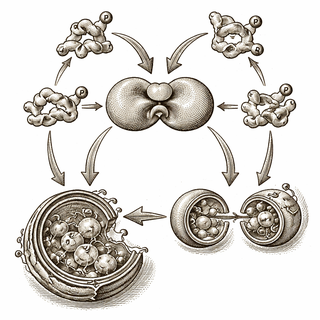
Disclaimer: The image accompanying this article is for illustrative purposes only and does not depict actual experimental results, data, or biological mechanisms.