Chronic pain affects roughly one in five people globally, and treating it has been notoriously difficult. Acute pain medications often don't work on persistent pain, and we haven't fully understood why. Now researchers have identified a specific cluster of brain cells that seem to control the transition from temporary to lasting pain - and they might have found a way to turn it off.
A study published in Nature by Nitsan Goldstein, J. Nicholas Betley, and colleagues at Penn and MIT identifies neurons in the brainstem's parabrachial nucleus that switch on during painful stimuli and stay active long afterward. Block these neurons, and chronic pain decreases. Short-term pain responses? Still intact. It's like finding the "pain memory" button and figuring out how to press delete.
The Neurons That Won't Shut Up
Most pain is transient. You stub your toe, it hurts, the signal fades. But in chronic pain, something in the nervous system gets stuck in the "on" position. The new research suggests that Y1 receptor-expressing neurons in the lateral parabrachial nucleus (lPBN) are that stuck switch.
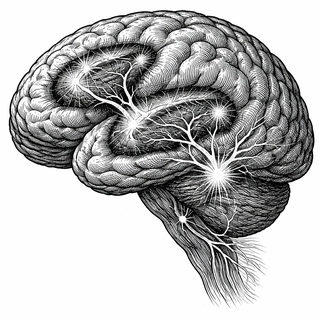
Here's the clever part: these neurons don't just process pain. They also integrate signals related to hunger, fear, and thirst. This overlap reveals something elegant about brain architecture - the same circuits that maintain chronic pain can be overridden when other survival needs take priority.
Ever notice that you forget about a headache when you're genuinely scared? That's not imagination. That's neural prioritization.
The Master Switch: Neuropeptide Y
The key player in this system is neuropeptide Y (NPY), a signaling molecule that helps the brain juggle competing needs. When hunger or fear takes priority, NPY acts on Y1 receptors in the parabrachial nucleus to dampen ongoing pain signals.
This explains an old puzzle: why do chronic pain patients sometimes get relief from completely unrelated circumstances? Their survival-need circuits are temporarily overriding the pain maintenance system.
Could This Work in Humans?
The obvious question: does this pathway exist in us? The researchers are cautious but optimistic. The parabrachial nucleus is highly conserved across mammals, and the Y1 receptor system is well-characterized in humans.
If the pathway translates, it could lead to treatments that specifically target chronic pain without affecting acute pain responses - a holy grail in pain medicine. Current approaches often blunt all pain sensation, which creates obvious problems (you need to know when you're actively being injured).
For the 1.5 billion people worldwide living with chronic pain, the idea that there's a specific neural switch - and that it might be targetable - is the most hopeful news in years.
Reference: Peeples L. (2025). Brain area linked to chronic pain discovered - offering hope for treatments. Nature. doi: 10.1038/d41586-025-03272-5 | PMID: 41062757
Disclaimer: The image accompanying this article is for illustrative purposes only and does not depict actual experimental results, data, or biological mechanisms.