The metallic taste of a bad penny, the buzz of a late-night fluorescent light, the pressure of your head on a pillow - all of that starts as raw sensation, then rockets through nerves and synapses before you can even complain about it. Meanwhile, deep inside a glioblastoma, some of the most stubborn tumor cells may be running their own daily schedule with copper. Because apparently even brain cancer likes a calendar. [1]
Glioblastoma is the nastiest common primary brain tumor in adults, and one reason it is so hard to treat is that a small population of glioblastoma stem cells acts like the tumor's emergency backup crew. You knock down the main body of the tumor, and these cells keep the operation alive like the villains who survive the final explosion. [1,5]
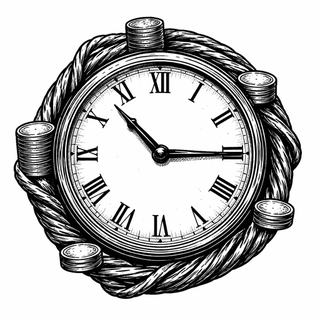
The new study asks a sharp question: if copper overload can kill cells through a process called cuproptosis, why do glioblastoma stem cells seem harder to kill this way? Cuproptosis is basically what happens when copper piles up in the wrong place, gums up mitochondrial machinery, and the cell spirals into metabolic catastrophe. Not elegant. Effective, maybe. A bit like pouring glitter into an engine. [1,2,3]
What the researchers found is that these stem-like tumor cells are not just passively tolerating copper. They appear to manage it on a circadian rhythm - a roughly 24-hour internal timing system better known for sleep and jet lag. In these cells, copper levels rose and fell over time, and that rhythm was tied to BMAL1, one of the core clock proteins that keeps cellular time. BMAL1 helped drive expression of ATP7A, a copper-exporting protein that lets the cells dump excess copper before it becomes lethal. [1,4]
The Tumor's Tiny Metal Bouncer
ATP7A is the paper's key character, and frankly it earns top billing. When copper got dangerous, ATP7A helped shove it back out. When the researchers disrupted BMAL1 or otherwise interfered with this clock-copper system, the stem cells lost some of that protection and became more vulnerable to cuproptosis-inducing treatment. [1]
The study goes one step further and shows that ATP7A also supports fatty acid desaturation, a metabolic process cells use to build and tune fats in their membranes. That means this copper-defense system is not only about dodging death. It also helps the tumor keep its membranes and metabolism in fighting shape. One pathway, two jobs - very efficient, very rude. [1]
Why This Is More Than a Weird Cell Biology Party Trick
This finding plugs into a bigger shift in cancer research. Since cuproptosis was defined in 2022, scientists have paid much closer attention to copper biology. Reviews over the last few years argue that copper can either help tumors grow or, if pushed hard enough, help kill them. That tension has even earned its own vocabulary: cuproplasia for copper-supported growth, cuproptosis for copper-triggered death. Biology loves nothing more than taking one molecule and making it everybody's problem. [2,3]
It also fits with mounting evidence that glioblastoma is clock-aware. Recent work has linked circadian machinery in glioblastoma to stemness, immune evasion, and treatment response, suggesting the tumor listens to the brain's timing cues too. [4,6,7]
So the real intrigue here is practical. If these results hold up, future therapies might work better as combinations: a copper ionophore or other cuproptosis-triggering drug plus a treatment that disrupts the tumor's clock or its fatty acid metabolism. Maybe timing when a therapy is given will matter too. Chronotherapy sounds slightly like a spa package, but in oncology it means matching treatment to biological time, and that idea is starting to look less mystical and more like basic scheduling with consequences. [1,4,7]
The Big Catch, Because There Is Always a Big Catch
Nobody with a glioblastoma should read this as "great, copper kills the tumor now." This is still preclinical work. The researchers used cell models, CRISPR screens, and mouse experiments to map a mechanism, not to prove a ready-for-clinic treatment. The paper itself points out that an earlier recurrent glioblastoma trial combining disulfiram, copper, and chemotherapy did not improve survival. So the challenge is not just killing tumor cells in a dish. It is finding a strategy that still works in the messy, guarded, shape-shifting reality of a human brain tumor. [1]
Still, the study gives something valuable: a better map of how the most treatment-resistant glioblastoma cells stay alive. If this line of work pans out, it could change how researchers think about metal handling, circadian timing, and metabolic weak spots in aggressive brain tumors. Sometimes progress looks like a miracle. Sometimes it looks like discovering that the tumor's toughest cells have been sneaking copper out the back door on a schedule.
References
- Yuan F, Wu X, Yuan H, et al. Glioblastoma stem cells resist cuproptosis with circadian variation of copper levels. J Clin Invest. 2025. doi:10.1172/JCI192599. PubMed: https://pubmed.ncbi.nlm.nih.gov/41480765/
- Chen L, Min J, Wang F. Copper homeostasis and cuproptosis in health and disease. Signal Transduct Target Ther. 2022;7:378. doi:10.1038/s41392-022-01229-y
- Tang D, Kroemer G, Kang R. Targeting cuproplasia and cuproptosis in cancer. Nat Rev Clin Oncol. 2024;21:370-388. doi:10.1038/s41571-024-00876-0
- Nelson N, Relógio A. Molecular mechanisms of tumour development in glioblastoma: an emerging role for the circadian clock. npj Precis Oncol. 2024;8:40. doi:10.1038/s41698-024-00530-z
- Arena A, Mazzoccoli C, Coppola A, et al. Elesclomol-induced increase of mitochondrial reactive oxygen species impairs glioblastoma stem-like cell survival and tumor growth. J Exp Clin Cancer Res. 2021;40:264. doi:10.1186/s13046-021-02031-4
- Xuan W, Hsu WH, Khan F, et al. Circadian regulator CLOCK drives immunosuppression in glioblastoma. Cancer Immunol Res. 2022;10(6):770-784. doi:10.1158/2326-6066.CIR-21-0559
- Gonzalez-Aponte MF, Dong Z, Li Y, et al. Daily glucocorticoids promote glioblastoma growth and circadian synchrony to the host. Cancer Cell. 2025;43:144-160.e7. doi:10.1016/j.ccell.2024.11.012
Disclaimer: The image accompanying this article is for illustrative purposes only and does not depict actual experimental results, data, or biological mechanisms.