Step 1: a signal fires. Step 2: nothing happens. Step 3: everything happens.
That, in a slightly rude nutshell, is how your brain avoids turning into an open-plan office where every conversation becomes your problem. A new Cell Reports paper looks at the claustrum - a thin, hidden sheet of neurons tucked deep beside the insula - and argues that this structure works less like a mystical "seat of consciousness" and more like a very opinionated building manager. Its job may be to decide which incoming chatter gets through and which gets quietly shown the door.
The claustrum has a strange reputation. It is tiny, deeply buried, and connected to an absurd number of other brain regions, which is how a structure ends up getting blamed for attention, sleep, and consciousness before lunch. But anatomy alone does not tell you what the thing actually does. The claustrum is hard to isolate, hard to image, and hard to study without dragging neighboring tissue into the story. Recent work helped pin down its cell types and long-range outputs, but the local wiring rules remained fuzzier than anyone would like (Erwin et al., 2021; Madden et al., 2022).
Meet the Tiny Bouncers
Graf, Sadeh, and Augustine studied inhibitory interneurons inside the mouse claustrum using optogenetics and circuit mapping. They focused on three well-known cell classes: parvalbumin, somatostatin, and vasoactive intestinal peptide neurons. The names sound like either a grant application or a very stressful brunch menu, but the logic is simple.
Parvalbumin and somatostatin interneurons put the brakes on claustrum projection neurons. Vasoactive intestinal peptide neurons do the sneaky opposite: they inhibit the inhibitors, which lets output rise. So the claustrum is not just an on-off switch. It is more like a lobby with multiple security desks, each trained to stop different kinds of nonsense.
The clever part is that these cell types are not arranged identically. They differ in how broadly they converge onto projection neurons and how they are distributed across space. That matters because the shape of a circuit changes what computations it can perform. In architecture terms, a hallway, a firewall, and a revolving door are all "passageways," but they do very different jobs.
Why This Matters More Than It Sounds
The authors built a computational model from the measured circuit properties and asked what this wiring might do. The answer was neat: these inhibitory networks can act as filters. Depending on which interneurons are engaged, the claustrum could bias its output toward cortical or subcortical targets. It could also favor inputs that are strong, organized, and coherent over ones that are weak, scattered, or noisy.
That last point is the headline. The claustrum may improve signal-to-noise ratio. In normal language: it may help your brain hear the sentence instead of the crowd.
The team then tested that prediction experimentally and found evidence that the claustrum does indeed spatially filter cortical input in the way the model predicted. That is satisfying because neuroscience papers sometimes end right when the model starts getting cocky. This one at least made the model show receipts.
From Mouse Circuits to Human Headaches
If this result keeps holding up, it gives a more grounded explanation for why the claustrum keeps showing up in discussions of attention, salience, sleep, seizures, and conscious state. A structure that filters and routes brain-wide traffic does not need to be a magical command center to matter a great deal. It just needs to sit in the right place and apply pressure at the right moments.
That fits with a growing literature. Reviews and lesion studies suggest the claustrum may help regulate cortical excitability and participate in cognitive control, synchronized brain states, and clinically relevant processes such as epilepsy and impaired awareness (Atilgan et al., 2022; Do et al., 2024). Other work shows claustrum output affects cortical areas differently depending on region, layer, and cell type (McBride et al., 2023).
The practical hook is easy to see. If the claustrum really helps separate useful signal from neural static, then failures in this circuitry could contribute to sensory overload, distractibility, seizure spread, or unstable brain states. That does not mean a claustrum fix is around the corner. We are still in mouse-circuit territory, and the human claustrum remains notoriously difficult to study without the neuroimaging equivalent of squinting through frosted glass.
Still, this paper does something useful. It takes the claustrum down from the mythology shelf and puts it on the engineering bench. Instead of asking whether this hidden strip of tissue explains consciousness with a capital C, it asks a better question: what local rules let this network improve the odds that important signals survive the trip?
That is a much sturdier blueprint. Also, frankly, a lot more believable.
References
Graf M, Sadeh S, Augustine GJ. Mapping the functional connectome of the claustrum: Noise filtering via local inhibitory circuits. Cell Reports. 2025;45(1):116821. DOI: 10.1016/j.celrep.2025.116821
Erwin SR, Bristow BN, Sullivan KE, et al. Spatially patterned excitatory neuron subtypes and projections of the claustrum. eLife. 2021;10:e68967. DOI: 10.7554/eLife.68967
Madden MB, Stewart BW, White MG, et al. A role for the claustrum in cognitive control. Trends in Cognitive Sciences. 2022;26(12):1133-1152. DOI: 10.1016/j.tics.2022.09.006
Atilgan H, Doody M, Oliver DK, et al. Human lesions and animal studies link the claustrum to perception, salience, sleep and pain. Brain. 2022;145(5):1610-1623. DOI: 10.1093/brain/awac114
McBride EG, Gandhi SR, Kuyat JR, et al. Influence of claustrum on cortex varies by area, layer, and cell type. Neuron. 2023;111(2):275-290.e5. DOI: 10.1016/j.neuron.2022.10.026
Do AD, Portet C, Goutagny R, Jackson J. The claustrum and synchronized brain states. Trends in Neurosciences. 2024;47(12):1028-1040. DOI: 10.1016/j.tins.2024.10.003
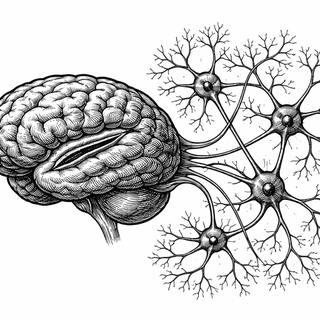
Disclaimer: The image accompanying this article is for illustrative purposes only and does not depict actual experimental results, data, or biological mechanisms.